The cost of living crisis
In the past, a wide array of issues dominated the headlines in the economic and political sphere–whether it be debates over climate change, gun control, immigration, or a litany of other issues, we as Americans have grown used to juggling this vast array of issues in our consciousness. Yet, since the onset of the COVID-19 pandemic, one issue has stubbornly remained more salient than all others–that being the cost of living (1). In particular, housing costs have added immense pressure on households in this economy–hitting the renters and those who don’t already own a house or apartment the hardest. In fact, since the onset of the pandemic in February of 2020, while cumulative inflation reached 28% (2), the median rent has increased a further degree at 32% (3) and the median house price has skyrocketed by a whopping 54% (4). This crisis has been felt acutely hard here in Pittsburgh, with median rents in the city rising 34% (5) in the same time period–faster than the national average–and us students are facing the brunt of it.
This recent trend reflects a more long-term trend with housing unaffordability. Since 1970, the median rent increased 1,208%, adjusted for inflation that represents a 62% increase, and the median house price increased 1,857%, when adjusted for inflation, that’s a shocking rise of 142% (6). This burden is felt by everyone–but it is felt acutely by those with lower incomes who have to spend greater proportions of their income on housing than those with higher incomes. Evidently, in order to attack the cost of living crisis we find ourselves in, it would be wise to start with this domain–particularly for those lower on the income scale.
False Boogeyman Number One: Greedy Landlords
No one is quite as accustomed to crummy landlords as us Pitt students, with the landlords of Oakland being infamous for neglecting their properties and tenants (7). Still, blaming them for the rise in housing costs is simply incorrect–something literally taught in ECON 101–or here at Pitt, ECON 100. While it is definitely true that landlords can be and often are greedy–and who can really blame them, we likely would be as well if we were in their situation. This completely misses how housing, and with that all prices are set. Like any other good or service in our capitalist society, housing prices are set by the laws of supply and demand–landlords will charge as much as possible without losing customers–that is without leaving their properties vacant. So, any solution to burdensome housing costs doesn't come from regulating landlords, a futile effort at best–rather it comes from increasing the supply of housing which would give us students (the customers) more options–and in turn force landlords across the board to lower the rent.
False Boogeyman Number Two: Institutional Investors
In January of 2026, President Trump, through power of executive action implemented a ban on large institutional investors from purchasing single-family properties–an odd move that appeased some of his most vocal critics on the left and drew critique from many of his allies on the right. This action follows in a recent trend of politicians implementing slopulist policies–policies that sound good to the uninformed ear and can appeal to a wide range of voters, yet do nothing to tackle the actual problem at hand. What percent of single-family houses do you think these corporate investors own in America? 20%? 10%? Maybe 5%? The actual number is less than 1% (8) of the housing supply is owned by these institutional investors. Perhaps if this number was higher, Trump’s executive order would provide an actual remedy to the housing crisis–but in the meantime, it serves simply as a distraction meant to appease the voters who elected him on the promise of lowering the cost of living and combatting inflation. Opponents of corporate investing in housing (which I would join if it was actually an acute problem) readily admit that this doesn’t cause distortions in the rental markets–institutional investors still play by the same laws of supply and demand that your grandfather who may be a landlord plays by–but they make a fair point that they can increase the price of purchasing a home by increasing demand for them. But again, I point back to the fact they own less than 1% of the total single-family unit housing stock. This number is way higher when it comes to multi-unit housing structures like apartment complexes–but this simply reflects the reality that one requires massive amounts of capital to finance such ventures–massive amounts that institutional investors can easily come by–but the average person obviously cannot.
False Boogeyman Number Three: Housing Developers and Luxury Construction
Another complaint that I often hear is that all new construction is in the “luxury new construction” category, with stunningly fancy complexes offering studio apartments at a mind-shattering rate of around $2,000 per month. Many of these units can be found across Pittsburgh–particularly in the North Shore area and the Strip District–hubs of local redevelopment. This perception is largely true; an estimated 98% (9) of new housing construction can be labeled as “luxury development.” I often hear arguments that this is one of the factors leading to increasing housing prices–but again, this is simply incorrect according to all empirical evidence, the laws of supply and demand, and quite frankly–common sense. When luxury housing is built, those who can afford it move into it–freeing up the standard units–increasing supply of them–and in turn lowering their prices. Housing advocates would be wise to cheer on the construction of these luxury complexes rather than decry them–yet we see the opposite happening. It may be fair to ask why aren’t standard units being more readily built–and that is a very fair question–but rather than decry greed or some other nefarious external factor–the reality is that the laws of supply and demand only allows for the construction of these luxury units. If you are like me, and would appreciate the new construction of cheaper units, it is more productive to look at the reality that it is too expensive to build these standard units–and therefore investors can only make a profit on the construction of luxury units.
False Remedy Number One: Rent Control
The city of New York is famous for its rent control policies, as well as their ridiculous housing costs. In fact 26% (10) of their entire housing stock is rent controlled. The election of Zohran Mamdani reflects this reality–with him promising to “freeze the rent” for those living in these rent stabilized units. Now I don’t want to blame New York City’s system of rent control as the only factor leading to their ridiculous housing prices–where the average one-bedroom apartment costs $3,750 (11) per month–-high rent is inevitable in a city with so much demand for housing given it is the center of the American economy–but it definitely is a factor. So what is rent control? Rent control is a system where the government mandates maximum increases in year over year rental prices in a (futile) attempt to lower housing costs. The reason this doesn’t work is simple–it does nothing to address either the supply side or the demand side of the problem. If only a portion of a city’s residences are rent controlled like in New York City, it will indeed lower the rents of those with rent-stabilized units–but it will massively increase the rents of those without rent-stabilized units (typically the majority of units like in New York City). For those units that are rent-stabilized–landlords often don’t have the means nor the financial incentive to provide upkeep to these units–creating what can only be described as slums. By contrast, if an entire city’s housing supply is rent controlled–a homelessness crisis will follow due to the total absence of new housing construction.
Rent control disincentivizes the only supply-side remedy to the housing crisis–that is building more units. Why would you invest in housing if you knew the government could regulate all your profits away and turn the balance sheet red? If you want a real-life example to reflect this reality, there is no better example than the Twin Cities of Minnesota–Minneapolis and Saint Paul. In May of 2022, the city of St. Paul implemented a new ordinance capping year over year rent increases at 3%, Minneapolis implemented no such ordinance. In the years following, St. Paul has seen yearly rent increases averaging 1.8% per year, by contrast Minneapolis has only seen yearly rent increases averaging 0.7% per year (12). In the same time period, multifamily construction permits in St. Paul fell a whopping 54%, while they increased by 15% in Minneapolis (13).
False Remedy Number Two: Down-Payment Assistance
Another common remedy I often see brought up are different forms of down-payment assistance programs–those being programs where the government covers a certain fixed amount of the down payment–paid for by the taxpayers. While it may sound nice to some, again it does nothing to address either the supply side or the demand side of the equation. In fact, they often have adverse effects on affordability–with the extra down payment assistance just leading to a corresponding increase in purchase price. A real life example of this can be seen in Bavaria, where in 2018, Bavaria began offering a €10,000 subsidy for homebuyers. Shocker, this led to housing prices increasing around €10,000 (14)–a prime example of full capitalization where the buyer gets €10,000 from the government, but the seller captures it through a €10,000 higher sale price. Still this €10,000 assistance didn’t come from thin air–it came from the taxpayers of Bavaria–representing a wealth transfer not from the rich to poor, but the opposite, from the poor to the rich–a system that I don’t believe anyone can defend.
The Actual Solution: Deregulate and Build More Housing
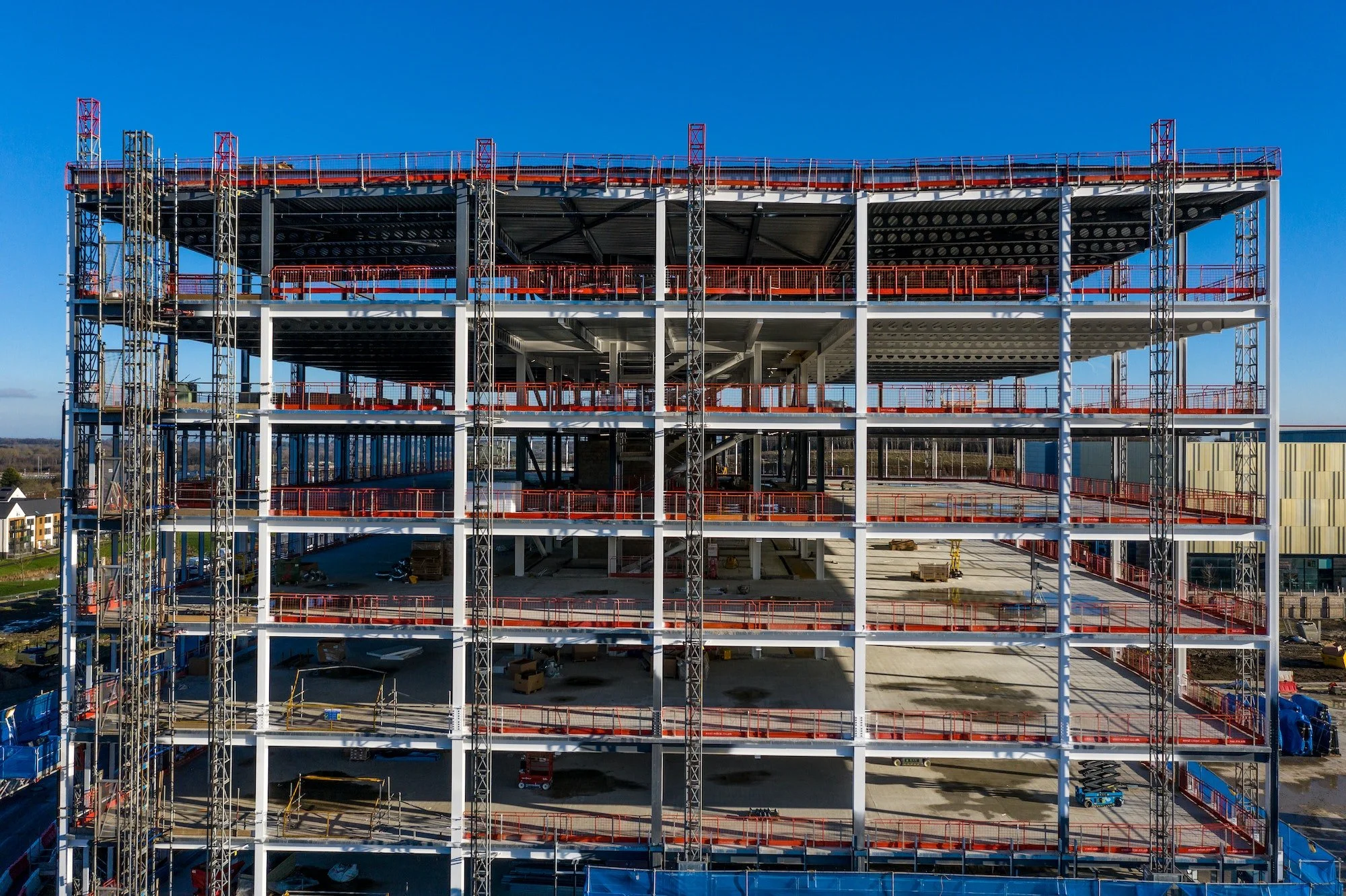
I’ve discussed this a little bit throughout the article–but let’s delve deeper into the solution–building more housing. Sometimes the best answer is the most obvious one–and in this case it is. Quite simply any solution either has to tackle the supply or demand problem–and we obviously can’t ban people from moving–so addressing the supply side of the equation is our only option. This seems quite obvious–something again you would learn in ECON 101, so one may naturally ask what is stopping us from building more housing.
The biggest opponent facing housing advocates are the NIMBYs–an acronym standing for “Not In My Back Yard.” NIMBYs often cloak their opposition to new construction on other grounds–whether it be “preserving neighborhood character” or “stopping gentrification,” but in reality, their position is simple–they don’t want new housing built around their homes in order to ensure that their house’s value will continue to rise–benefiting them at the expense of the rest of society. Examples of NIMBYism can be seen across Pittsburgh–for example, in Shadyside, residents opposed a plan to replace a Victorian house with a six-unit apartment building, arguing that the project did not fit the character of the neighborhood. The zoning board rejected the proposal, showing how even small multifamily projects can face resistance in high-demand neighborhoods (15). Another example can be seen in our home of Oakland, where in 2022, the city council attempted to upzone the neighborhood, allowing the construction of taller buildings that would provide more units. The proposal was “widely criticized by residents and other stakeholders,” and City Council paused the changes after public backlash (16).
Austin, Texas provides a recent example of how increasing housing supply can reduce rents. After a pandemic-era rent surge, the Austin metro added tens of thousands of new apartments, including roughly 25,000 to 31,000 units in 2024 alone. As new units entered the market, rents in large apartment buildings fell 7% (17) from 2023 to 2024, the largest decline among U.S. metro areas. Notably, the largest decline was not in luxury units but in older Class C apartments, where rents fell 11.4%, suggesting that new supply can relieve pressure across the broader rental market rather than only benefiting high-income renters. Austin made it easier to build housing by loosening zoning rules and reducing development barriers. The most important reforms included allowing more homes on lots that had previously been limited to single-family use, lowering minimum lot-size rules, and eliminating parking minimums. For example, Austin’s HOME Initiative allowed up to three units by-right on many single-family lots, and Phase 2 reduced minimum lot sizes while adding flexibility on setbacks, height, and design standards (18).
While the solution to the housing crisis is clear–the political reality of the situation makes this a hard task. The right and the Republican Party seem to take no interest in the issue, instead placating their largely home-owning constituents who wouldn’t want to see increases in housing supply despite the larger benefit for society it would bring. By contrast, the left and the Democratic Party seem to be making the situation actively worse with their excessive regulations and implementation of false remedies like rent control discussed earlier. Another reality that points in the wrong direction is that old people vote–and the young do not–and this is especially true in local and state elections where changes in zoning and housing regulation can actually be made–and so long as that trend continues, I do not see a future where this crisis is solved.
